What AI Can't Replace in Your Product Team (And What It's Quietly Breaking)
In this article, you will learn what AI genuinely can't do in design and engineering work — and why the teams that misunderstand this are about to make expensive budget decisions based on a demo.
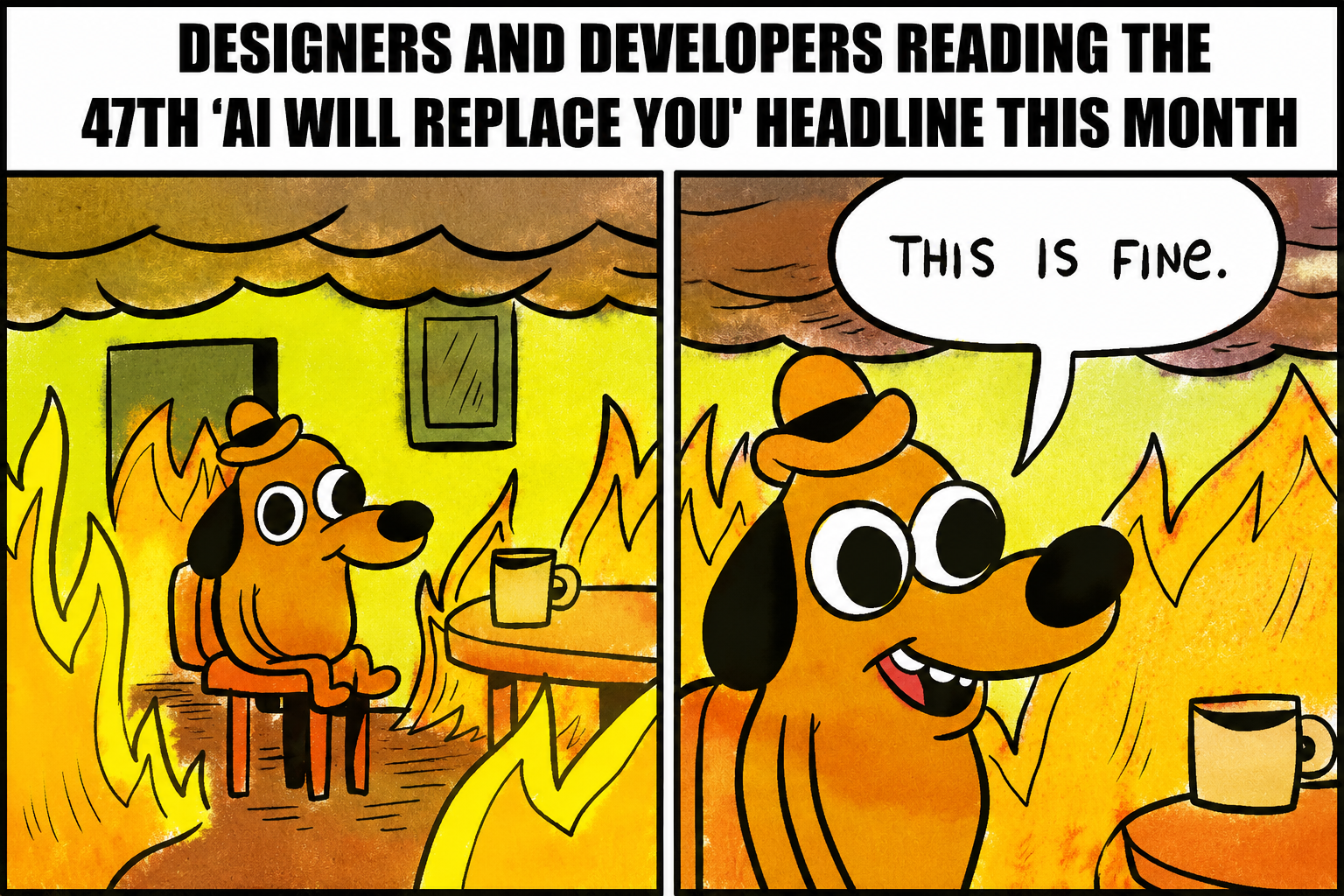
Every quarter there's a fresh wave of articles announcing that designers and developers are about to be automated away. The demos are slick. The fear is real. The conclusion is wrong — and the way it's wrong is going to cost you money, because most of you are about to make budget decisions based on it.
Let me save you the meeting.
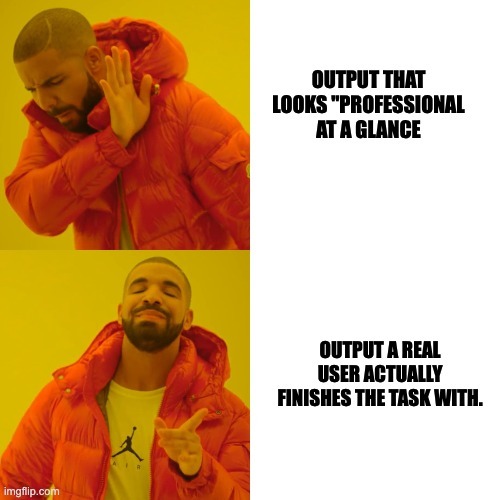
Yes, AI is powerful. It writes working code. It generates layouts that look professional at a glance. It produces a dozen variations before you've finished saying what you want. Pretending otherwise is silly.
The honest question is not "can AI do parts of design and engineering?" — obviously it can. The honest question is what specifically expert humans still do that AI can't, and whether that work is 5% of the job or 80%.
Spoiler: it's 80%. Here's what doesn't survive contact with reality.
1. AI will happily solve the wrong problem with stunning efficiency
Clients don't show up with well-defined problems. They show up with symptoms, contradictions, and budgets. "We need a redesign" usually means something else — the brand shifted, a competitor launched, the CEO hates the color blue this quarter, somebody saw a deck from a16z. Half the time nobody at the company actually knows why they want it. They just know things feel off.
A senior designer spends most of a kickoff figuring out what the real problem is before solving anything. That work is listening, asking awkward questions, reading the room, and pushing back when the brief is wrong. AI can draft questions for you. It cannot sit across from a VP and feel that he's lying about what's actually driving the project.
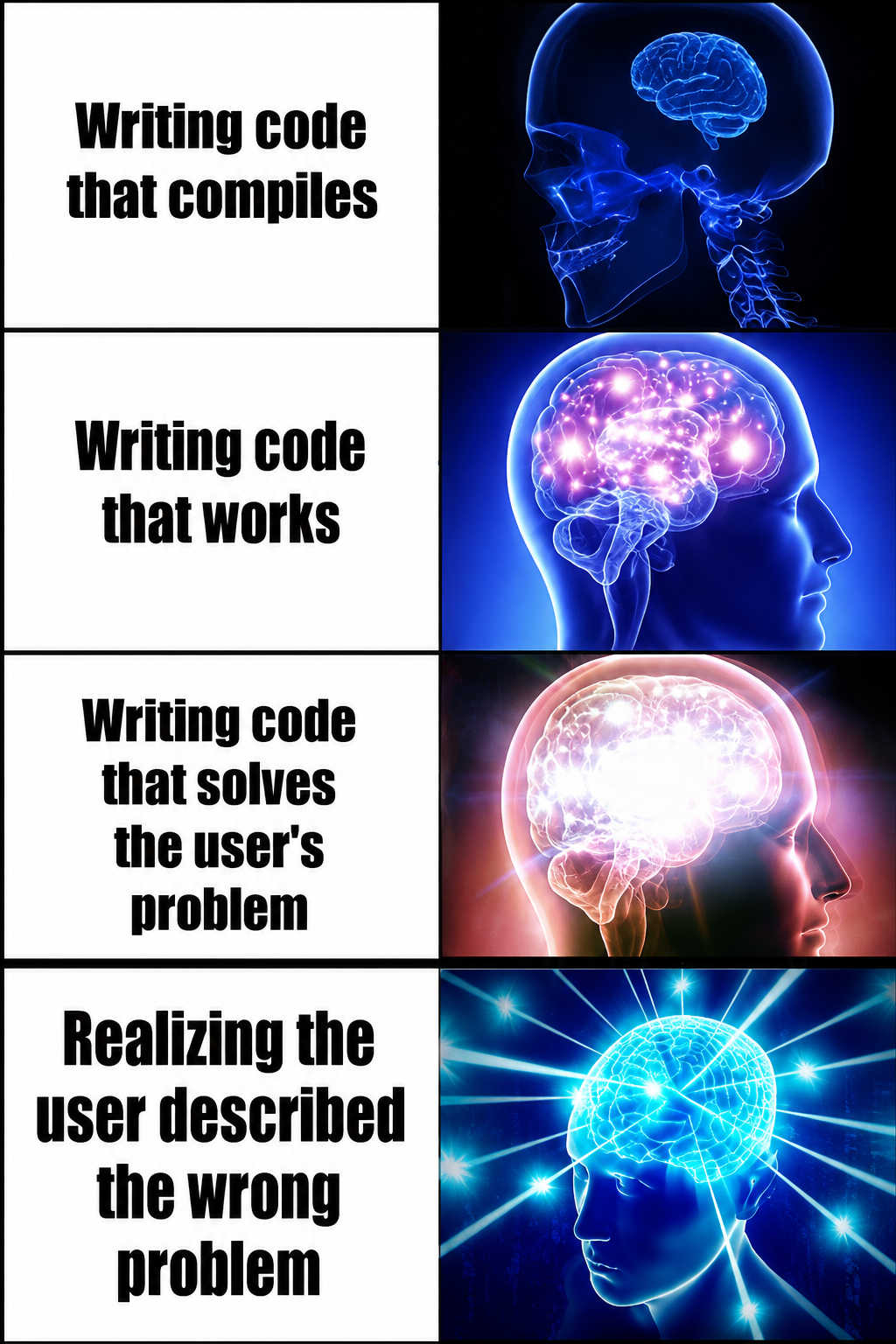
So if you hand AI the wrong problem, what happens? It solves it. Beautifully. Quickly. With professional-looking deliverables. Then you ship something nobody wanted.
That's not productivity. That's an expensive way to be wrong faster.
2. Taste is built from a thousand failures. You can't prompt it.
AI generates plausible output. Plausible is not good. Plausible is the floor — "could have come from a competent intern who has seen a lot of Dribbble."
Taste is something else. Taste is looking at three options and knowing the second one is right and being able to explain why. It comes from shipping work, watching it fail, watching it succeed, and building a private library of what actually works for real users in real products. That library doesn't transfer through a prompt. It can't. The people who tell you otherwise are selling something.
This is why so much AI-generated work feels like it was made by someone who has seen a lot of design but never had to defend any of it. Smooth surface. Hollow decisions underneath. Tests fine on screenshots. Falls apart on Tuesday.
3. Nobody puts an AI on the org chart when things go wrong
When the system goes down at 2am, somebody has to make a call. When the launch flops, somebody has to explain it to the board. When the feature ships and harms users, somebody has to fix it and answer for it.
AI doesn't get fired. AI doesn't go to the post-mortem. AI doesn't have a reputation to protect. Someone in your chain still has to own the decision — which means someone has to be senior enough to overrule the AI when it's confidently wrong. Which it is. Often.
A lot of what you're paying senior people for is the willingness to say "I'll stake my name on this." That's not a feature ChatGPT is launching next quarter.
4. AI is brilliant at problems it has already seen. Your problems are not those problems.
AI is best at problems that look like a thousand other problems. The further you get from the well-trodden middle — regulated industries, unusual user populations, novel product categories, weird hardware, anything actually proprietary — the more AI output starts looking like a confident summary of how somebody else solved a different problem.
The interesting design problems don't have ten thousand examples on the internet. The interesting engineering problems are interesting because the obvious solution doesn't work. That's where senior humans earn their keep, and that's exactly where AI is least useful.
5. The job is mostly politics. Sorry.
Most professional work is not the craft. It's everything wrapped around the craft: convincing a skeptical exec, mediating between two teams who can't stand each other, deciding which battle is worth fighting this quarter, keeping a project alive when budgets get cut, mentoring a junior who's about to quit.
This part of the job is not going anywhere. If anything, as AI compresses production time, the relative weight of these human layers grows. The agency or in-house team that wins in 2026 isn't the one with the best prompts — it's the one that can navigate your organization while shipping work that holds up.
6. Using AI well requires being good enough to catch its mistakes
This is the trap nobody talks about honestly: to use AI well, you have to be good enough to know when it's wrong.
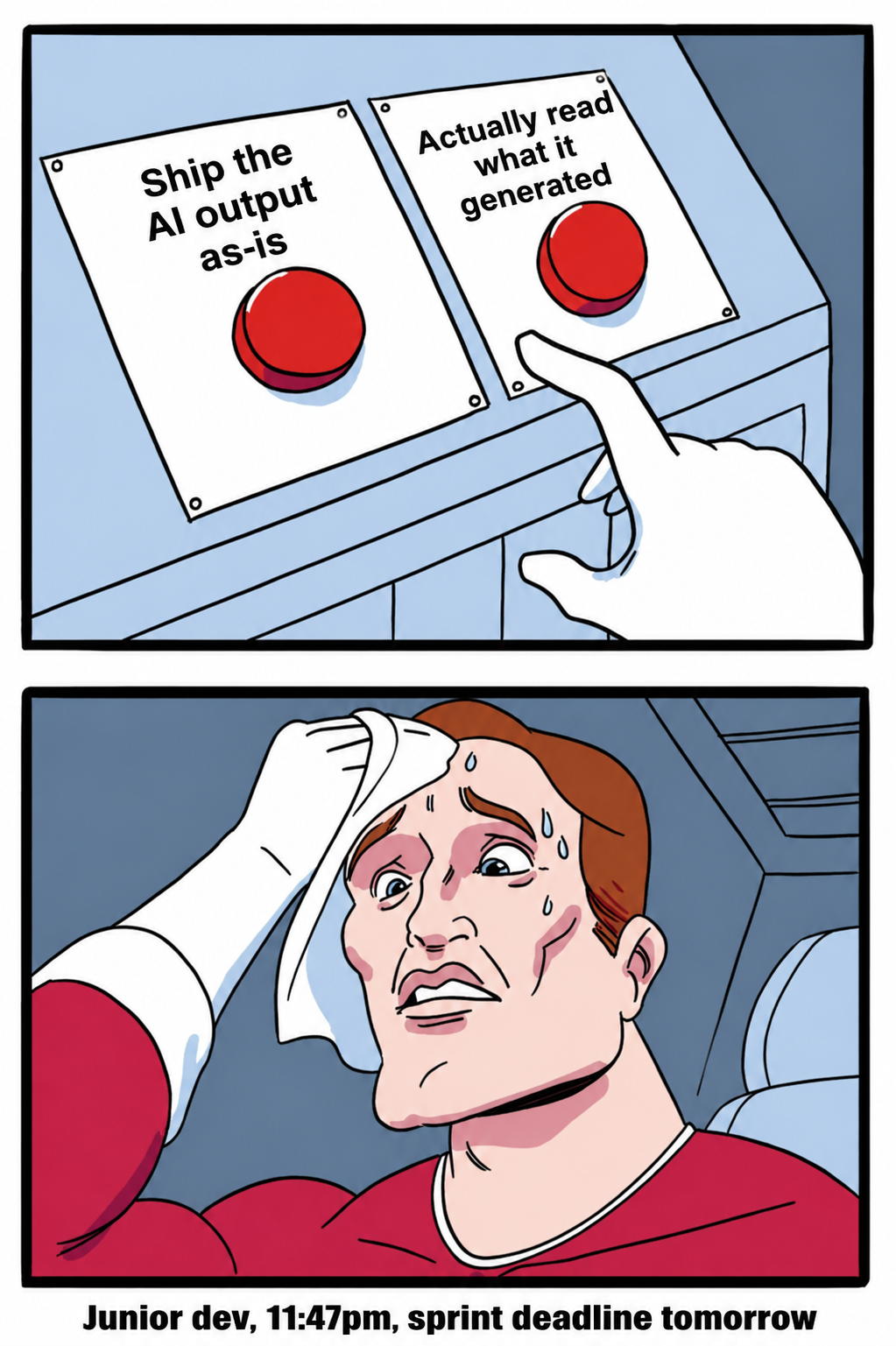
A junior who can't tell good code from bad code will ship the bad code AI gave them. A non-designer with AI tools will accept the first thing that looks shiny. AI output is only as good as the person reviewing it.
So the more AI gets used, the more important deep expertise becomes — not less. The expert isn't the one typing. The expert is the one who knows when to throw the output away.
7. AI doesn't just fall short — it actively makes design worse
Up to here we've discussed what AI can't do. Now the uncomfortable part: situations where AI doesn't just underperform, it actively damages the work.
The clearest example is something we see at ANODA almost weekly: clients running their own design feedback through ChatGPT.
Here's how it goes. The client takes a screenshot of a finished screen, drops it into ChatGPT, and pastes back a wall of bullet points. "AI says the visual hierarchy is unclear." "AI says the button placement should be reconsidered." "AI flagged the spacing on the secondary CTA." Sometimes thirty comments in a single email. From a person who has never opened Figma.
Three things go wrong every single time:
1. The AI is missing 90% of the context. It hasn't seen your user research. It doesn't know the technical constraints, the brand decisions made six months ago, the analytics from last month's A/B test. It can't see hover states, animations, or how this screen connects to the next. It reviewed a JPEG and pretended it reviewed a product.
2. AI gives volume without priority. A senior designer doing a critique tells you the three things that matter. AI gives you forty things, treats them as equally important, and delivers them all in the same calm authoritative tone. Your team now spends a sprint relitigating decisions that were already made — for nothing.
3. The feedback always sounds smart. "Consider improving visual hierarchy." "Tighten the spacing." "Reconsider the color palette." "Review the information architecture." The advice isn't wrong. It's just empty — true of every interface ever made, useful for none of them.
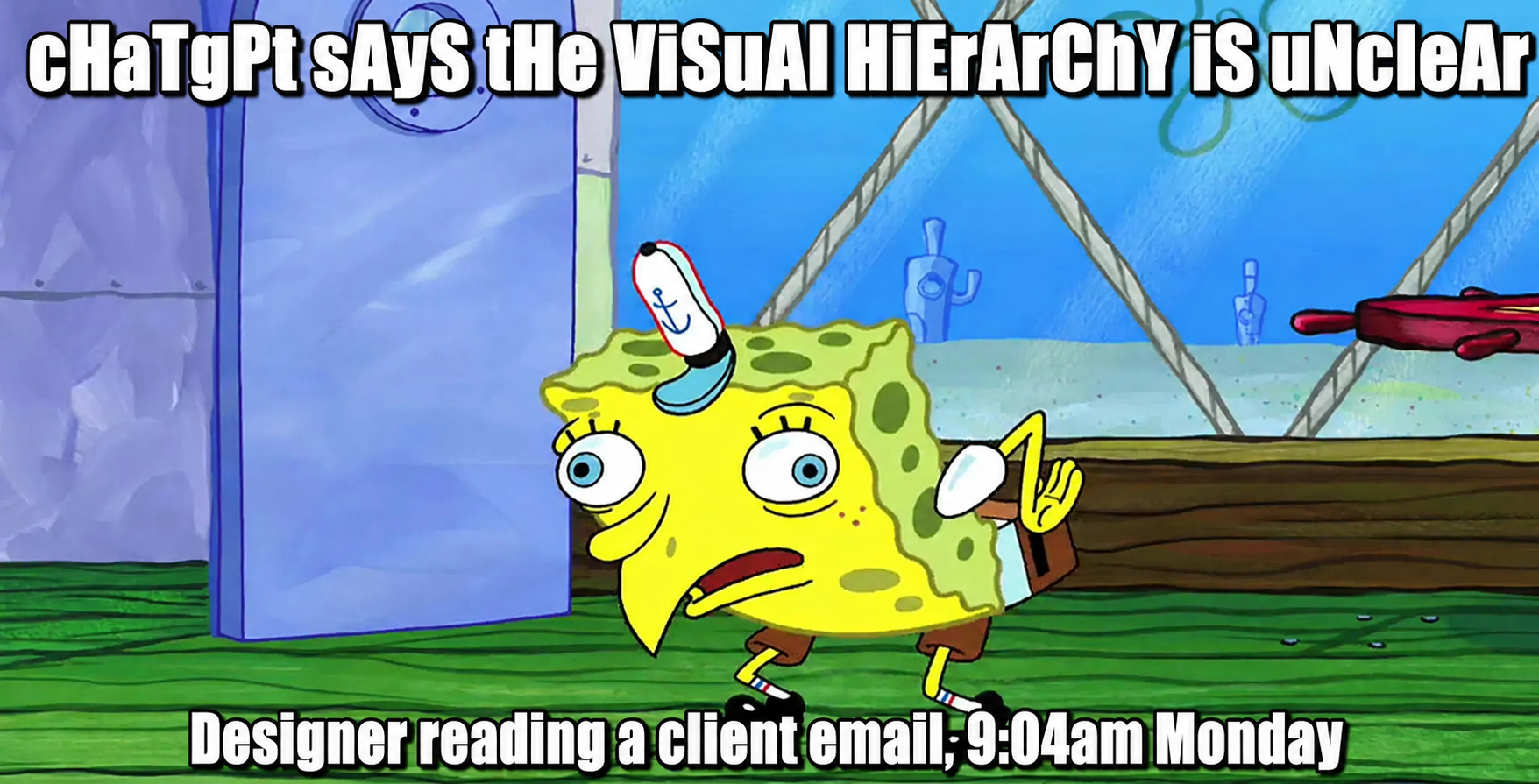
The deeper damage: this creates fake work. Designers defend real decisions against imagined problems. The client thinks they got a rigorous expert review. In reality they got pattern-matched platitudes from a model that never met their users, never read their analytics, and never sat in a single research interview.
Other places AI quietly makes UX/UI worse:
- Skipping research. Designers "generating user personas" with AI instead of talking to actual humans. The output looks plausible. The product gets built for people who don't exist.
- Homogenization. AI is trained on what already exists, so AI-led design pulls every product toward the same aesthetic mean. Differentiation dies. Your product ends up looking like everyone else's, which is fine if you don't care about being remembered.
- Accessibility regressions. AI-generated UI often hits the visual brief but fails on contrast ratios, focus states, screen-reader labels, and keyboard navigation — because nobody asked the model, and the model didn't volunteer.
- Hallucinated user needs. Ask AI "what do users want from a banking app" and you'll get a confident, generic, wrong answer. Real users want something specific to their situation, which AI cannot know.
The pattern is the same across all of these: AI removes the friction that used to force good decisions. Research was annoying, so people did it carefully. Critique was expensive, so it was prioritized. Designers had to defend choices, so they made fewer bad ones. AI dissolves all that friction — and a lot of design quality lived inside the friction.
The fix isn't to stop using AI. It's to stop treating its output as authoritative. Use it to draft, brainstorm, and accelerate. Never to decide.
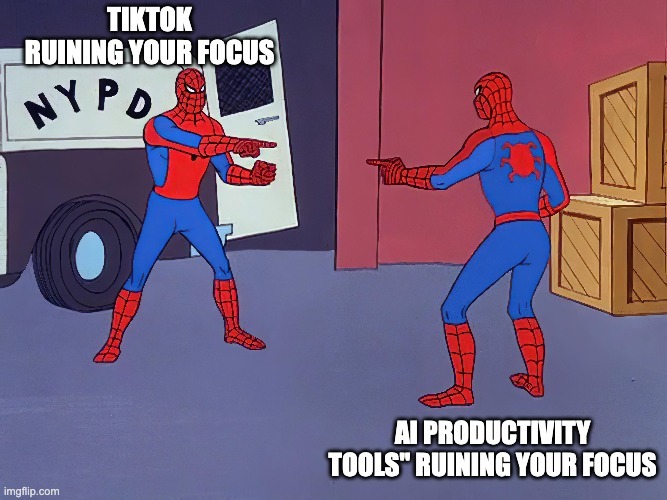
8. AI breaks your focus more than TikTok does — and it's designed to
Now the part of the conversation everyone pretends not to see.
TikTok is at least honest about being TikTok. It interrupts you. You feel captured. You can put the phone down. AI is sold as a focus tool and behaves as an attention machine, but with one upgrade: you feel productive the entire time you're losing.
Let me be specific about what's actually happening.
Your AI assistant is a business. Stop pretending it isn't.
OpenAI, Anthropic, Google — every company in this space monetizes one of two things: tokens consumed (API and usage pricing) or subscription limits (the more you use, the harder it is to leave). Nobody at any of these companies wakes up wondering how to deliver your answer in fewer tokens. The product is structured, top to bottom, to encourage longer responses, more turns per session, more sessions per week. That's not a conspiracy. That's a P&L statement.
You see this in the texture of every interaction. An answer that should be three sentences becomes nine. A two-line code change becomes a "let me explain the reasoning behind each decision" essay nobody asked for. A simple question gets met with three alternatives "in case any of these would also be helpful." Every padding choice is also a revenue choice.
You're not imagining the verbosity. You're inside the business model.
Every output ends with "Would you also like me to…"
Pay attention to how AI responses end. Almost every one closes with a soft upsell. "I can also draft a follow-up email." "Would you like me to expand on any of these?" "Want me to write the tests for this too?" That isn't helpfulness. That's the engagement-maximizing pattern that powered every social network you've ever quit.
Each suggestion is plausible. Each one is adjacent to what you actually asked for. Each one moves you one step further from the original task. By the time you've taken five "while you're here" suggestions, you're three problems away from the one you opened the tab to solve — and you've burned an hour feeling productive.
This is how AI dissolves your focus. Not by interrupting you. By being helpful in a direction you didn't choose.
Building from scratch ≠ maintaining a real product
If your only experience of AI is "generate a landing page" or "write a script from zero," you have a wildly inflated sense of what it can do. AI is excellent at the easy half of engineering: greenfield projects with no constraints, no existing patterns to respect, no users already depending on current behavior.
Real software work is almost never greenfield. It's editing a system that already exists, where:
- A function signature change in one place silently breaks three callers somewhere else.
- A "simple refactor" deletes the workaround that fixed a customer bug six months ago.
- "Improved" code quietly drops support for the data shape your iOS app from 2023 still sends.
- The "cleaner" version no longer matches your team's existing patterns, so the next engineer rewrites it again.
AI loves to "improve" things. It generates changes you didn't ask for, helpfully renames variables that other systems reference, and confidently breaks backward compatibility in the name of best practices it picked up from blog posts about how greenfield projects should look. The output is technically nicer. The product is now broken.
The same pattern hits design. Ask AI to "redesign this screen" and it doesn't redesign the screen — it generates a different screen that ignores your component library, your existing user flow, your brand decisions, and the things your users already know how to do. It's faster, sure. So is throwing your codebase away.
The senior people already figured this out
The designers and developers actually getting value from AI in 2026 don't mix focus work with AI work. They block the two separately. They think with the AI assistants closed and use them only after the thinking is done. They batch their AI sessions instead of living inside them. They treat every "would you also like me to…" suggestion as the trap it is.
That discipline is a skill. AI won't teach it to you. Your team has to build it deliberately — and the longer you wait, the more expensive the focus damage gets.
In conclusion — a note for CMOs and Product Managers
If you've read this far and you're the one accountable for whether the product converts, adopts, and retains: this matters more to you than to anyone in the building.
You've already noticed. The decks coming back from agencies and internal teams got faster and somehow more generic. Wireframes look polished but solve a version of your problem that doesn't quite exist. Landing page copy is fluent and forgettable. The flow tested fine in the prototype and lost users in week one.
That's not your imagination. That's what happens when a creative team's process is structured around prompting instead of thinking. The work ships on time. It doesn't move the metric.
The teams that still move metrics — for SaaS onboarding, fintech conversion, AI-product adoption — are the ones who protect focused thinking on your problem before any tool gets opened. They sit with your user research. They argue about the actual job-to-be-done. They make decisions they can defend without saying "the AI suggested it."
Two questions to ask any team — in-house or agency — before your next sprint or engagement:
- Walk me through the last decision your senior designer made that overruled the AI. If they can't answer in under 60 seconds with a real example, the AI is doing their thinking.
- How do you protect deep-focus time on my problem? If the answer is "we don't, we move fast" — your metric won't move either.
The cost of getting this wrong isn't paid in the design phase. It's paid in your activation curve, your churn rate, and the six months of rework you'll quietly fund next year.
Work with ANODA
We're a UI/UX design and development agency for SaaS, Fintech, and AI products. Since 2013, we've helped companies turn complicated products into interfaces real users adopt and keep using. Recognized on Behance, Dribbble, and Awwwards — but what our clients actually value is what we ship: complete design systems, mobile and web apps, and the development to back them up.
We use AI. We just don't let it think for us. Every product we ship is shaped by deep focus on your users, your business model, your metric. Not someone else's.
— The ANODA team UI/UX Design & Development · Building things humans actually use since 2013


Got Questions?
No. AI handles production tasks well, but the work that moves metrics — problem framing, taste, accountability, navigating org dynamics — still requires experienced humans. That's roughly 80% of the job.
It solves it beautifully and quickly. You ship something nobody wanted. Speed without correct problem definition isn't productivity — it's an expensive way to be wrong faster.
Taste is the ability to look at three options and know which one is right — and explain why. It's built from years of shipping real work, watching it succeed and fail. That library doesn't transfer through a prompt.
A human on your team. AI doesn't attend post-mortems, doesn't get fired, and has no reputation to protect. Someone still has to be senior enough to overrule the AI when it's confidently wrong.
Much less so. AI performs best on problems that resemble thousands of others it's seen. The further you are from the well-trodden middle — unusual industries, novel hardware, proprietary systems — the less relevant its output becomes.
AI reviews a screenshot without seeing user research, analytics, brand decisions, or interaction states. It produces 40 equally-weighted generic comments. Your team spends a sprint defending real decisions against imagined problems.
The opposite. To use AI well, you have to be good enough to catch its mistakes. A junior who can't tell good code from bad will ship whatever AI gives them. Expertise becomes more important, not less.
It ends every response with "would you also like me to…" — plausible suggestions adjacent to your actual task. Five turns later you're three problems away from the one you opened the tab to solve, and you feel productive the entire time.
Real software work means editing systems where changes in one place silently break things elsewhere. AI confidently refactors code, renames variables other systems reference, and breaks backward compatibility in the name of best practices.
Ask them to walk you through the last decision a senior designer made that overruled the AI. If they can't answer in 60 seconds with a real example, the AI is deciding — not them.

.png)

.avif)




.avif)


.svg)
.svg)


