Top 10 UX Design Agencies to Work With September 2025 Best UX agencies 2025
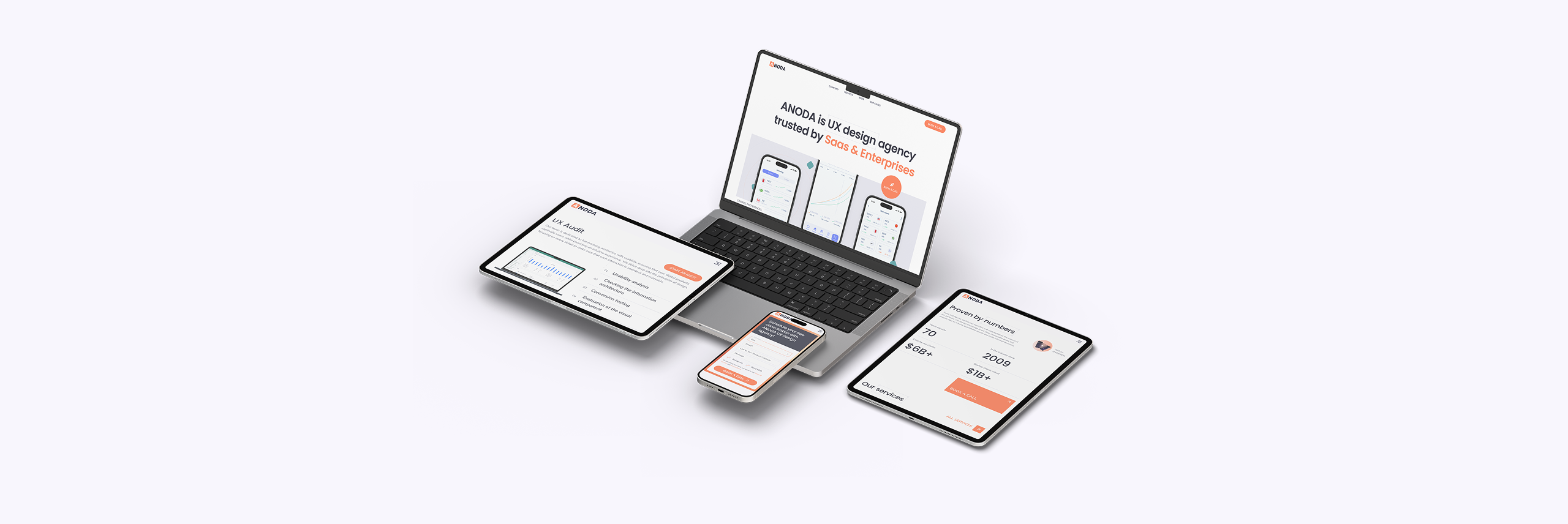
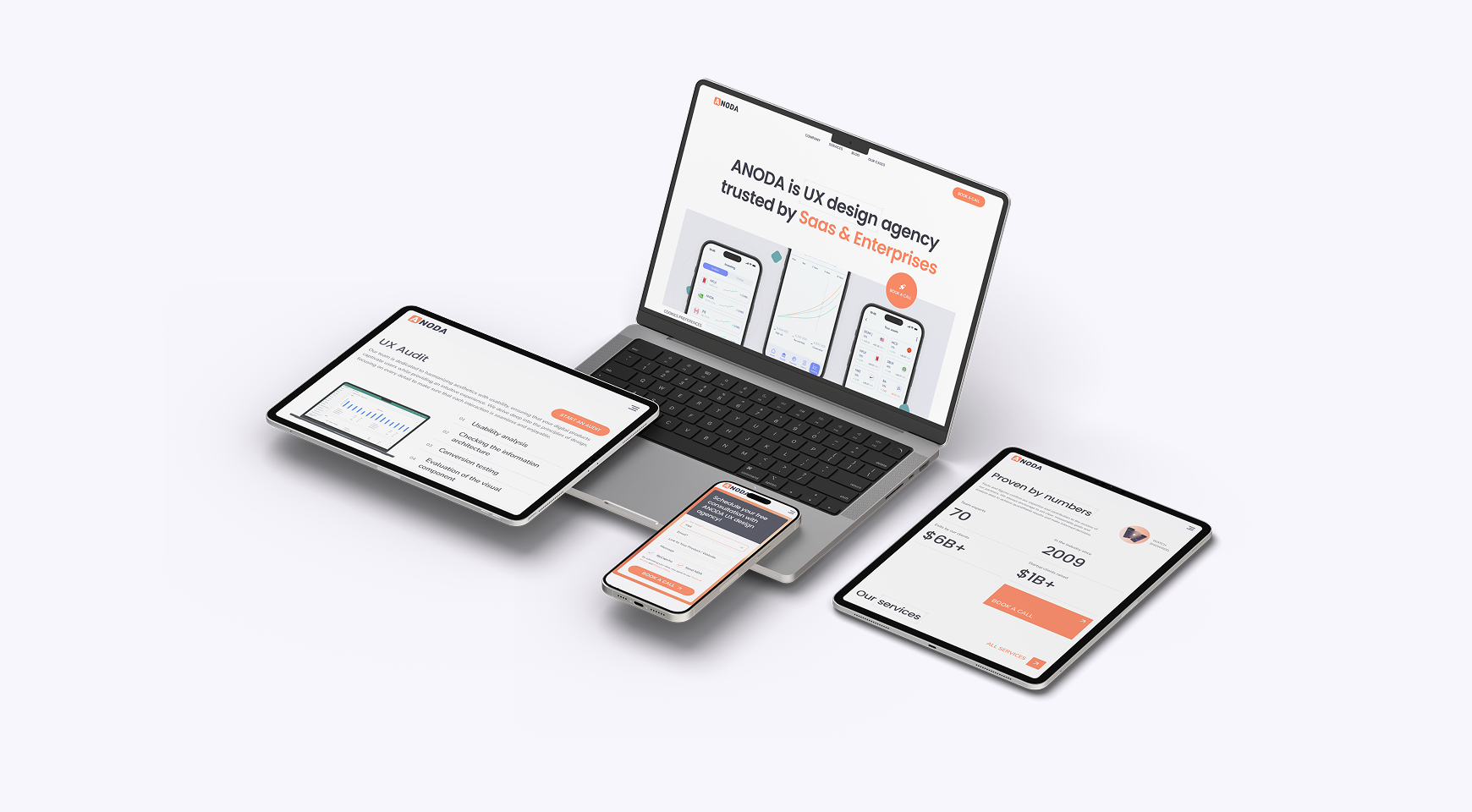
Looking for the best UX agencies in 2025? We’ve researched and updated this list for September 2025, featuring small-but-mighty U.S.-based UX agencies that deliver tailored strategies, intuitive experiences, and measurable results. These boutique teams deliver close client collaboration, depth of talent, and standout creativity. Whether you're a startup scaling fast or a mid-size brand elevating its digital presence, these are the partners who bring impact.
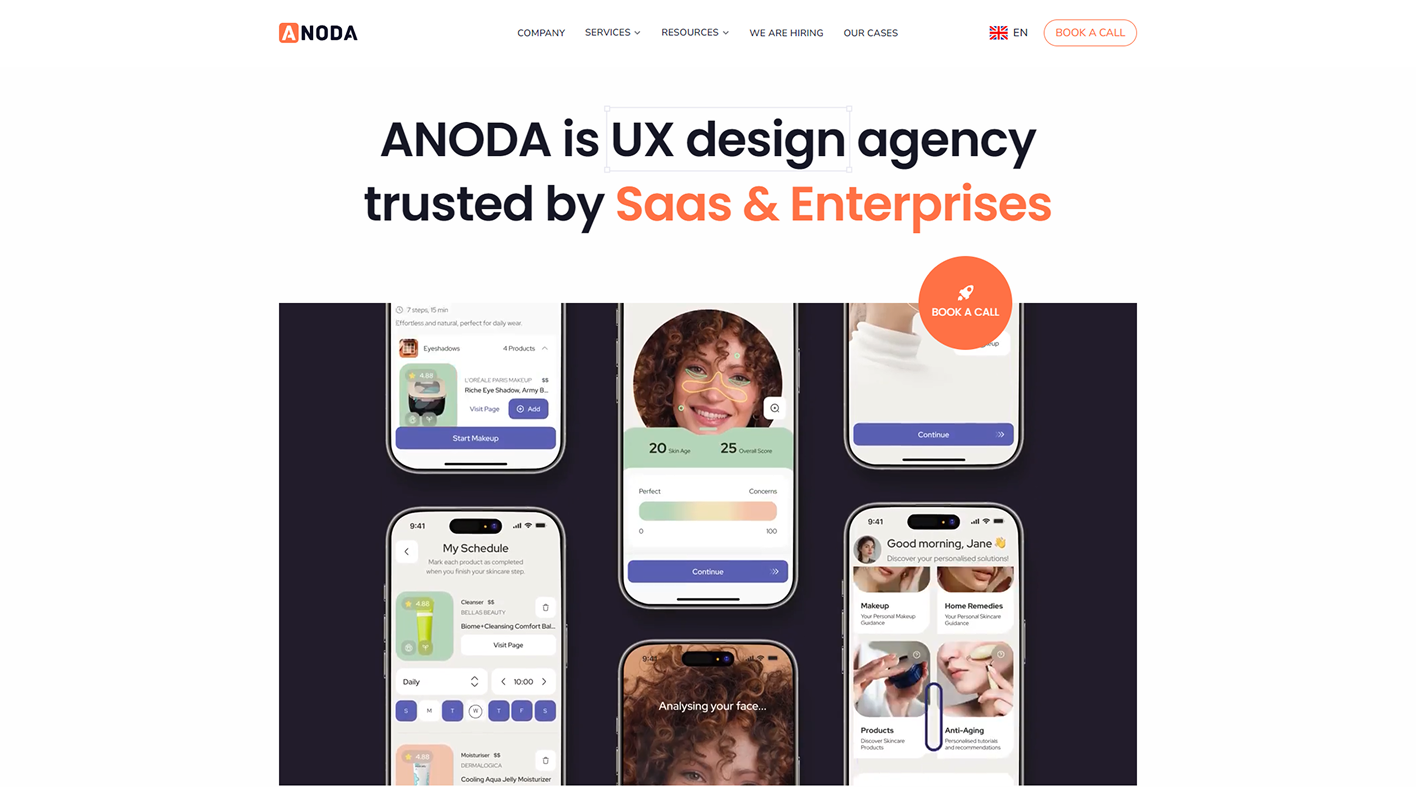
1. ANODA UX Design Agency
Best for: Research-driven UX and seamless design-to-development execution
Strengths: Embedded teams, deep UX research, full-cycle product design & development
Known for: Trusted by SaaS startups and global enterprises; flexible collaboration and measurable results
ANODA works with both SaaS companies and enterprises as a fully dedicated UX and development partner. Their boutique team of 30 embeds directly into client workflows, combining data-backed research, thoughtful design, and reliable engineering to deliver products that scale.
Unique offerings include:
- Flexible, scalable teams. Quickly adapt resources based on project demands without losing momentum.
- Proven domain expertise. Over a decade of experience across fintech, mobility, retail, and healthcare.
- Measurable outcomes. On average, clients see a +45% boost in user engagement, with 90% recommending ANODA to peers.
Since 2013, ANODA has partnered with global leaders like Netflix, HBO, Tesla, Samsung, Airbnb, Starbucks, Cisco, and Coca-Cola, helping them build intuitive experiences backed by strong technical delivery.
For companies seeking a partner that bridges UX strategy with development execution, ANODA stands out as the #1 UX agency to work with in September 2025.
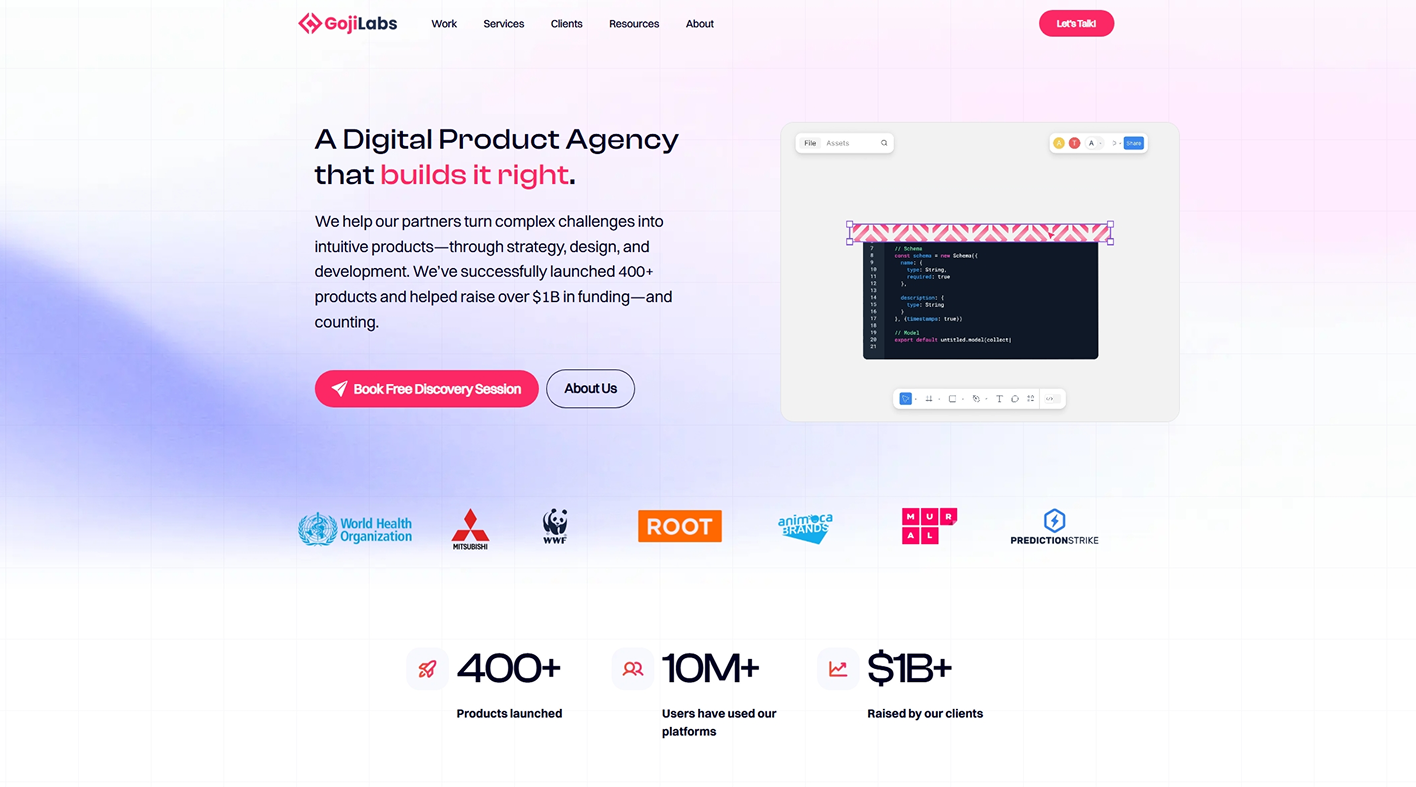
2. Goji Labs
We craft user-centered digital products through research-driven design and agile development.
Best for: Startups, nonprofits, and organizations seeking impactful digital platforms
Strengths: Product discovery, usability testing, mobile-first UX, agile sprints
Known for: Transparent communication, mission-driven projects, scalable product design
Downside: As a smaller design agency, they take on a limited number of projects at a time
Goji Labs is a U.S.-based design agency founded in Los Angeles, combining product strategists, UX researchers, and engineers into a compact, effective team. Their mission is to create functional, accessible, and socially impactful digital products. Over the past decade, Goji Labs has collaborated with organizations like the World Health Organization, UCLA, and the World Wildlife Fund, helping them deliver digital tools that blend usability with long-term scalability.
What sets Goji Labs apart is its research-first approach. Every engagement begins with discovery workshops, user interviews, and iterative prototyping to ensure that products are firmly grounded in real user needs. Their agile, feedback-driven process makes them an ideal partner for startups and mission-driven organizations that value clarity, speed, and measurable results.
3. Daito Design
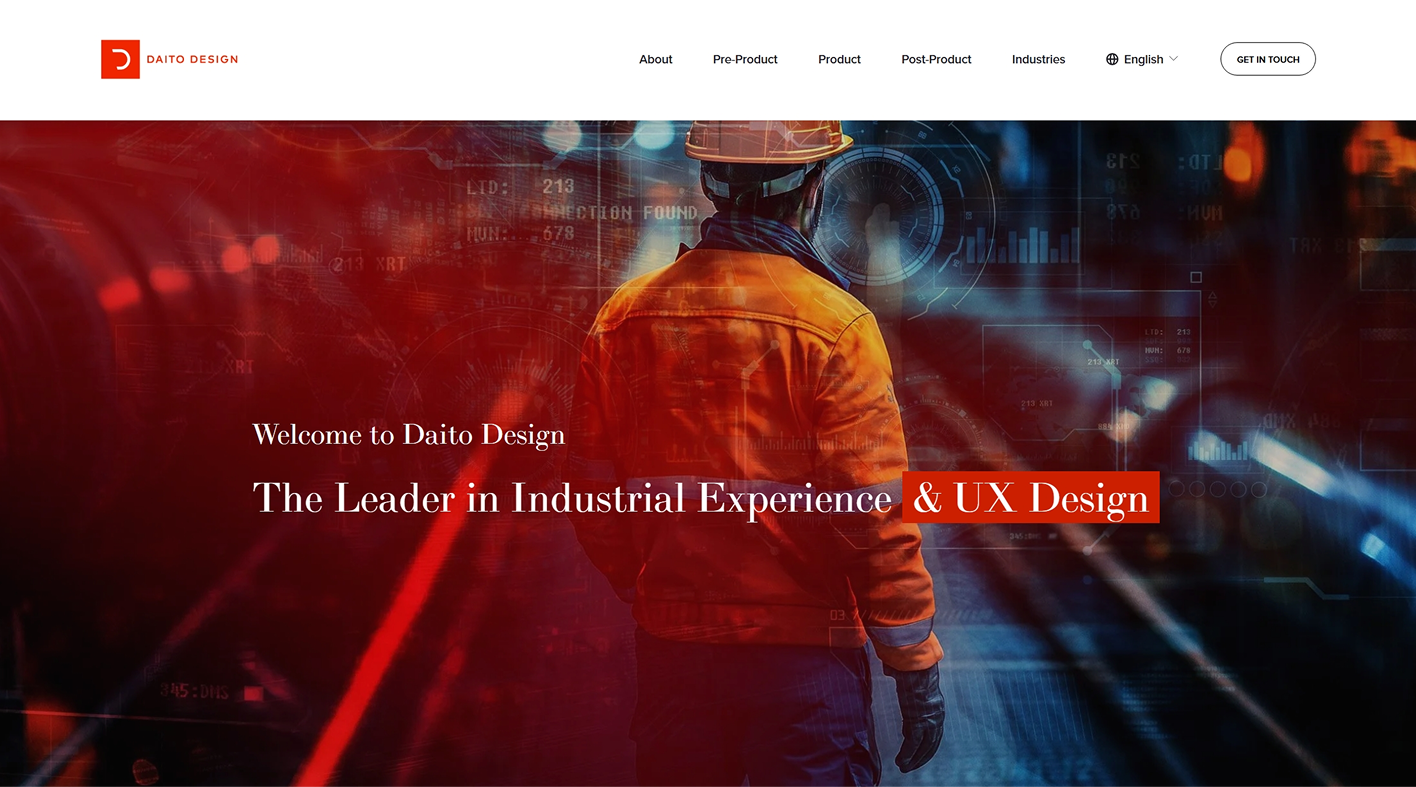
We help innovation teams turn complex ideas into products that perform.
Best for: Industrial, enterprise, and technical UX that requires depth and strategy
Strengths: Research-led usability, full-lifecycle UX (pre-product to post-product), measurable outcomes
Known for: Tackling high-stakes domains (energy, financial tech, healthcare) with scientific precision
Downside: Smaller team means selective engagement capacity and occasionally tight timelines
Daito Design is an Austin-based design agency with a team of approximately 11-50 professionals. They support both startups and enterprise innovation teams through every stage from product-market fit validation to UX design, all the way through post-launch change management and continuous improvement
Their work stands out for its field-driven UX research, rooted in real-world observation and backed by analytics. Whether they’re working across nuclear energy, finance, or medical technology, their design solutions focus on reducing adoption time, improving retention, and de-risking decision-making
4. Momentum Design Lab
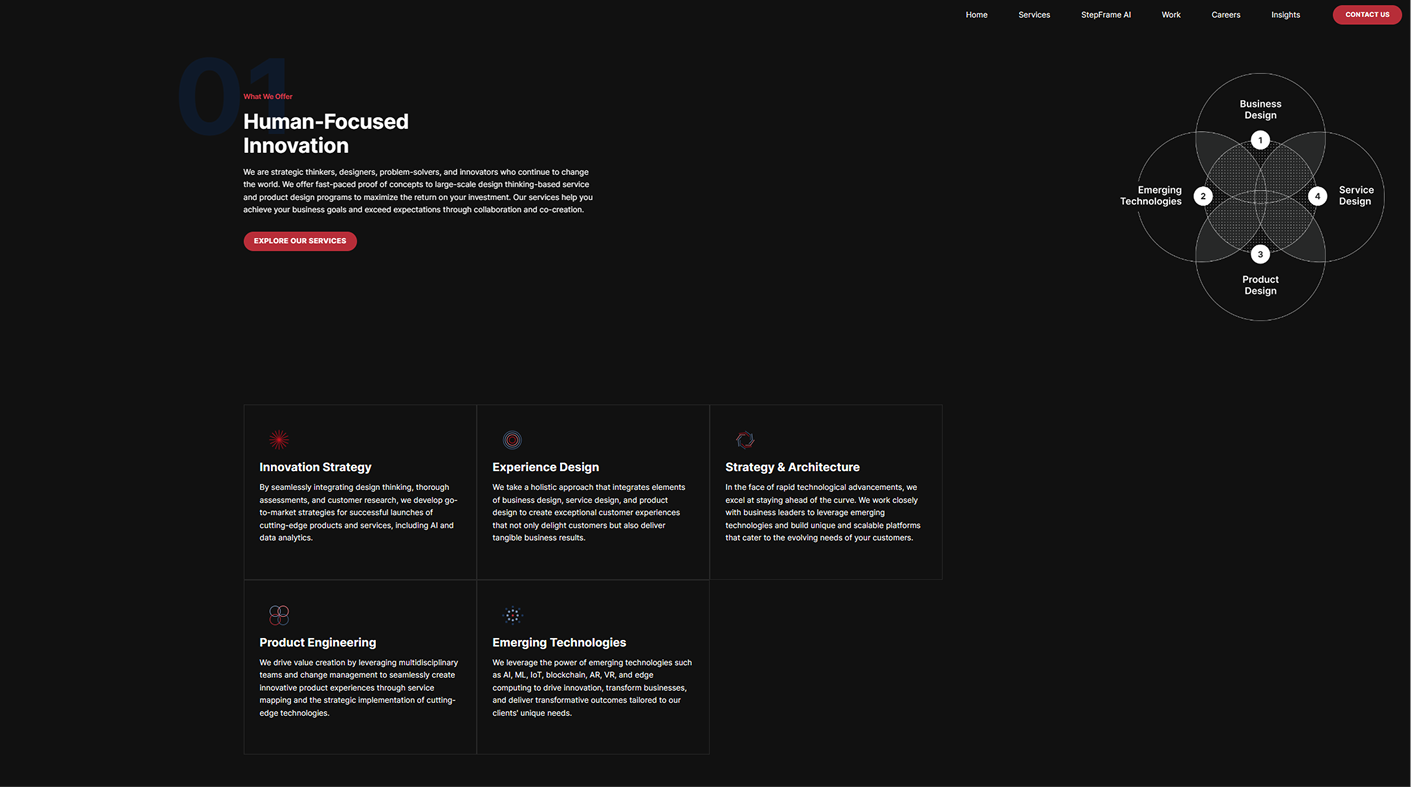
We advance human-centered experiences using design thinking, innovation strategy, and product engineering.
Best for: Enterprises and innovation teams needing seamless design-to-development workflows
Strengths: Integrated UX and engineering, emerging tech fluency (AI, IoT, service design), robust project processes
Known for: Delivering enterprise-grade solutions to startups and Fortune 500 clients across industries
Downside: Medium-sized team (1050) means capacity is limited for many simultaneous engagements
Momentum Design Lab is a Silicon Valley-based design agency with 1049 staff, operating since 2002. They blend human-centered design thinking with development capabilities, serving startups through Fortune 500 enterprises.
Their expertise spans innovation strategy, experience design, product engineering, and emerging technologies like AI, IoT, and blockchain. They regularly work with enterprise clients in sectors such as financial services, healthcare, automotive, and consumer electronics.
Clients value Momentum's structured delivery and professionalism. Reviewers frequently note that projects stay on time and within budget, highlighting clear communication across complex teams
5. Slide UX
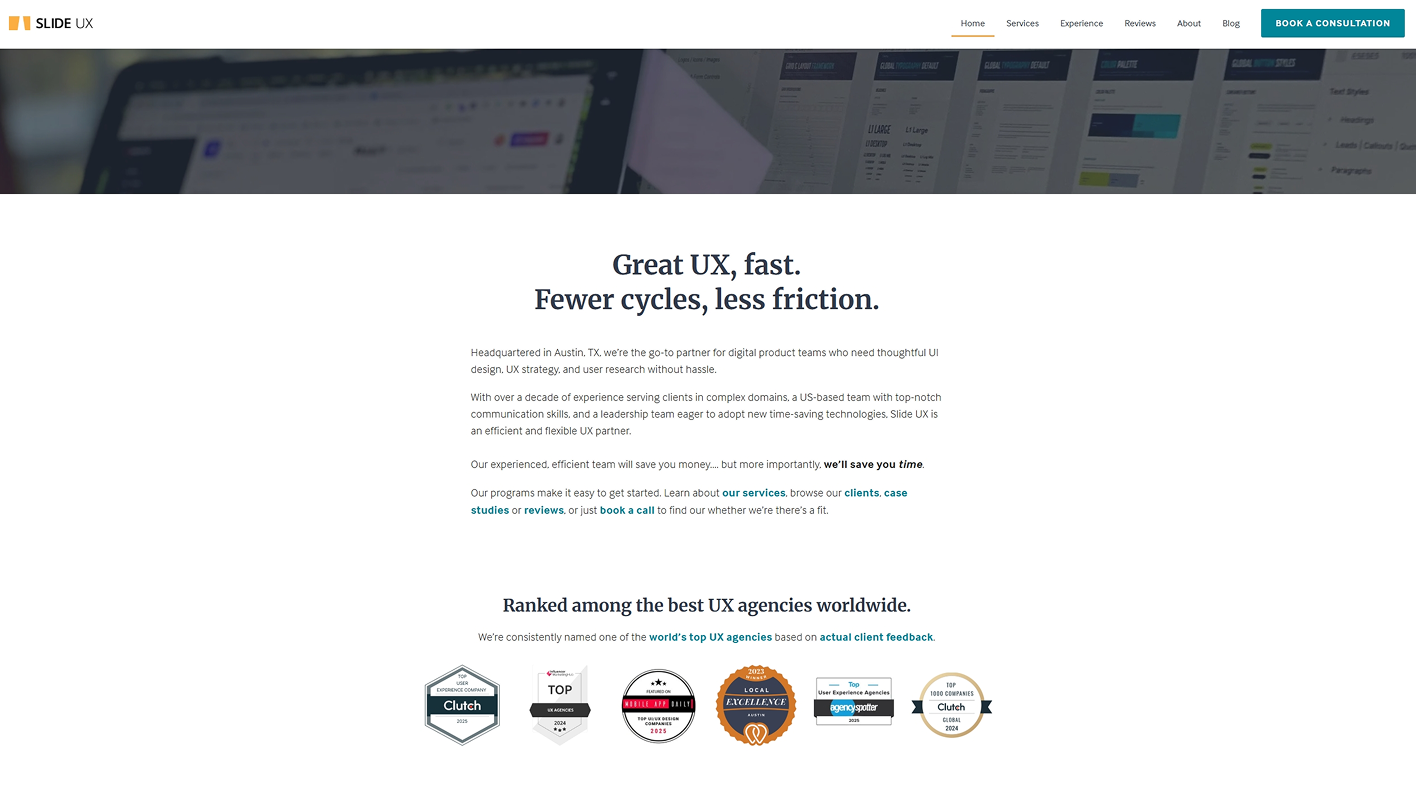
We design user experiences that simplify complex domains like brain health, aging, and caregiving.
Best for: Digital platforms focused on aging, brain health, and care
Strengths: Specialized domain expertise, practical UX strategy, efficient delivery
Known for: Designing for cognitive change and supporting dignified user interaction
Downside: Niche focus limits the breadth of industry applications
Slide UX is an Austin-based design agency founded in 2012 with around 14-19 team members. They carve their niche in sectors like AgeTech, healthcare, and brain health creating interfaces that serve users with cognitive impairments and those who support them.
Their process blends early-stage validation, rapid product definition, UX and UI execution, and hands-on design leadership. Clients appreciate Slide UX's ability to reduce friction in complex systems and streamline decision-making.
Their rate ranges from $150-199/hour, with a minimum project size around $5,000making them both accessible and experienced. Slide UX’s clear communication and efficient workflows make it a practical choice for product teams needing domain-focused UX support without unnecessary complexity.
6. Glow Design Agency
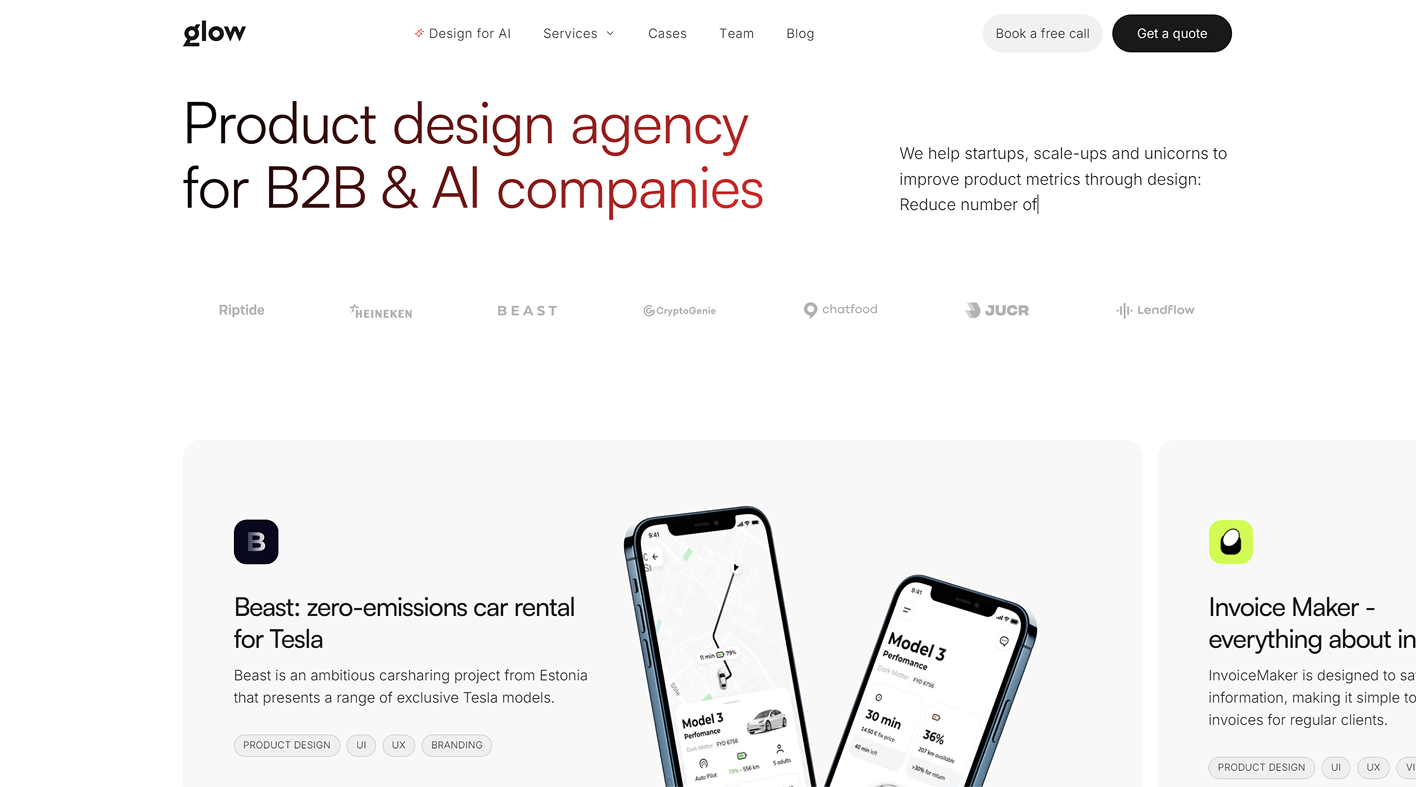
We help startups and scale-ups grow through intuitive, metrics-driven design.
Best for: Startups and scale-ups needing predictable UX workflows
Strengths: Subscription-based design squads, fast onboarding, transparent iteration process
Known for: Consistent product velocity through month-to-month UX teams
Downside: Remote team and detailed design files can require extra coordination for handoffs
Glow Design Agency is a U.S.-based design agency that offers a unique subscription model clients access to a ready-made, cross-functional product-design team on a flexible, predictable monthly basis. Founded in 2019, they specialize in UX/UI design for fintech, transportation, and AI startups and scale-ups.
What distinguishes Glow is their 3-day no-commitment trial quick way for teams to experience their process before fully engaging. After that, the agency sustains partnerships through steady design velocity, iterative feedback cycles, and access to a multi-person squad that can handle both UI and product interaction needs.
Their clients frequently mention Glow’s responsiveness, clean visual standards, and structured process even under tight deadlines or across time zones
7. Rossul
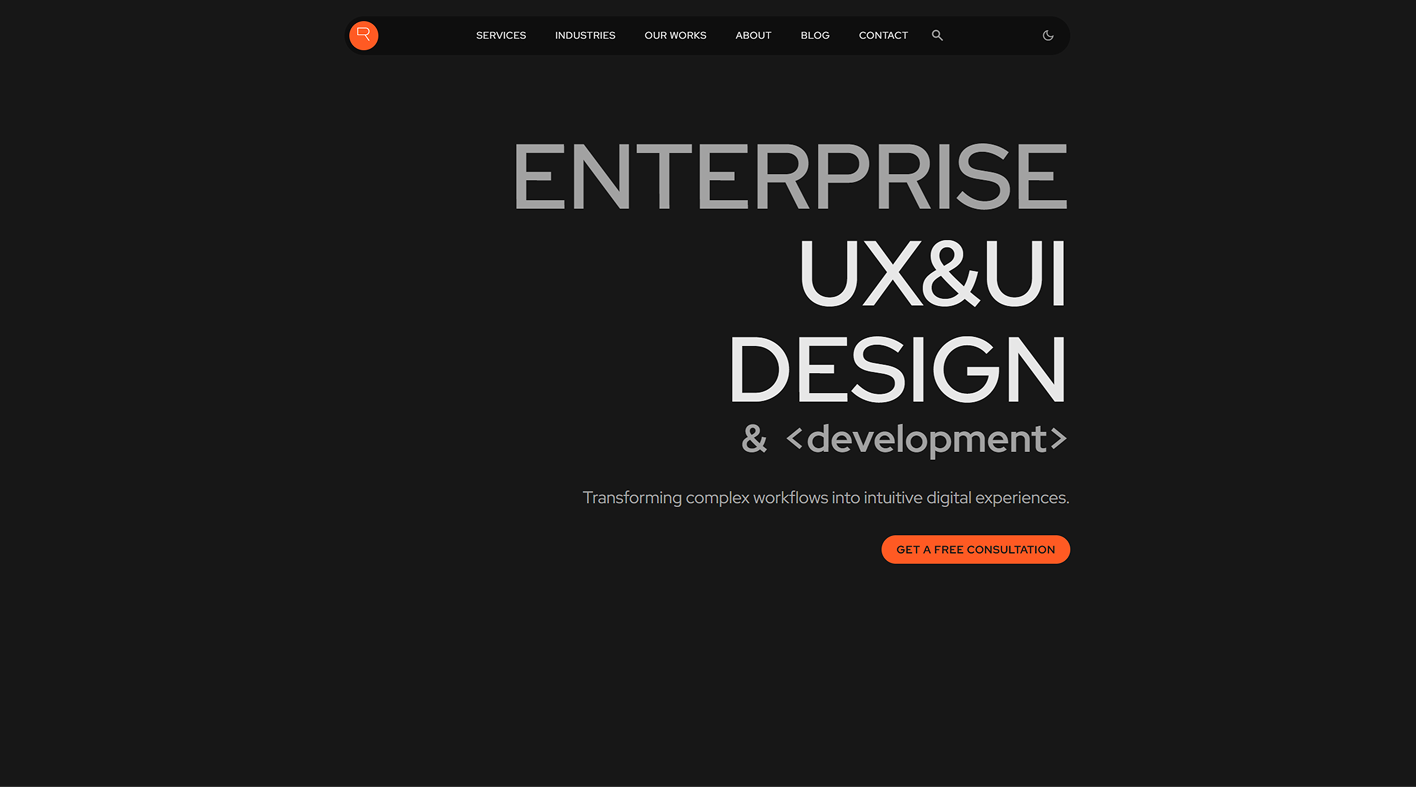
We simplify enterprise UX by transforming complex workflows into clear, usable software.
Best for: Enterprise SaaS, embedded systems, and internal tools
Strengths: End-to-end UX/UI design, custom app development, scalable design systems
Known for: Specializing in technically complex B2B software across industries like healthcare, finance, and logistics
Downside: Primarily enterprise-focused; may not be ideal for smaller startups or rapid MVPs
Rossul is a design agency with more than two decades of experience. They combine strategy, UX design, and front-end development to modernize enterprise-grade applications whether it’s a SaaS platform, embedded UI, or legacy system.
They work across sectors such as finance, healthcare, logistics, education, and construction, helping organizations deliver intuitive, high-impact digital systems while maintaining compliance and usability.
Clients have recognized Rossul for their methodical UX process, thoughtful hierarchy of information, and ability to leap from workshop to deployment with precision and clarity.
8. Guidea
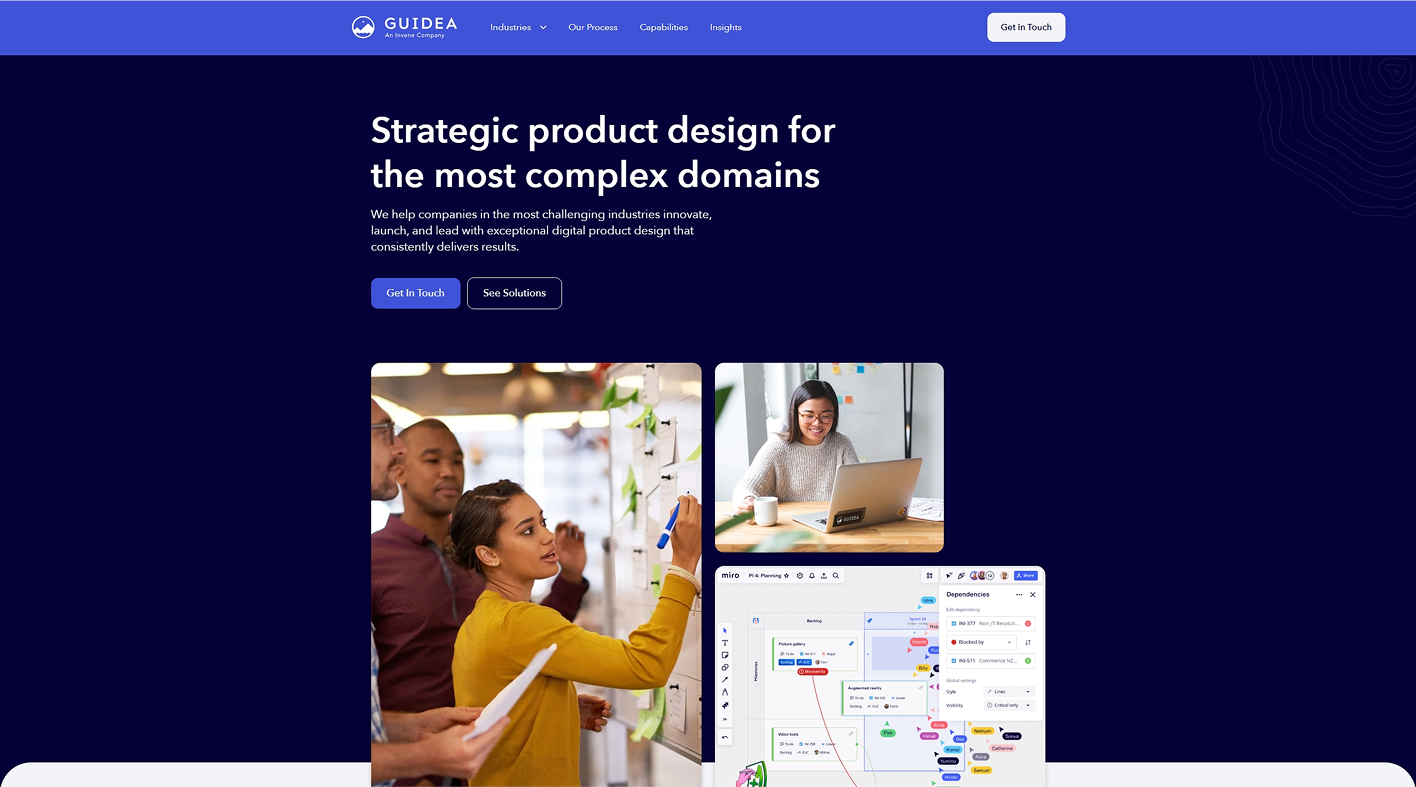
We deliver strategic, high-impact digital product design for complex, regulated sectors.
Best for: Enterprise and startup teams facing technical or regulatory complexity
Strengths: Deep research, strategic product design, MVP to scale workflows
Known for: Long-term partnerships with Fortune 100 companies and innovation in digital health
Downside: Smaller team (10-49) may limit capacity for simultaneous large-scale projects
Guidea is a U.S.-based design agency founded in 2005 in Austin, Texas, with a team size of approximately 10-49 professionals bringing mature capabilities. They’ve built a reputation as trusted design partners for 20 of the Fortune 100, as well as a range of startups and enterprise teams across sectors such as digital health, fintech, edtech, fintech, and cloud services.
Guidea’s Strategic Product Design methodology spans the full product lifecycle from discovery and MVP validation to iterative scaling and Designs support. With over 300 live products and 18 years of design expertise, they deliver clarity and ROI in challenging domains.
9. Dreamten
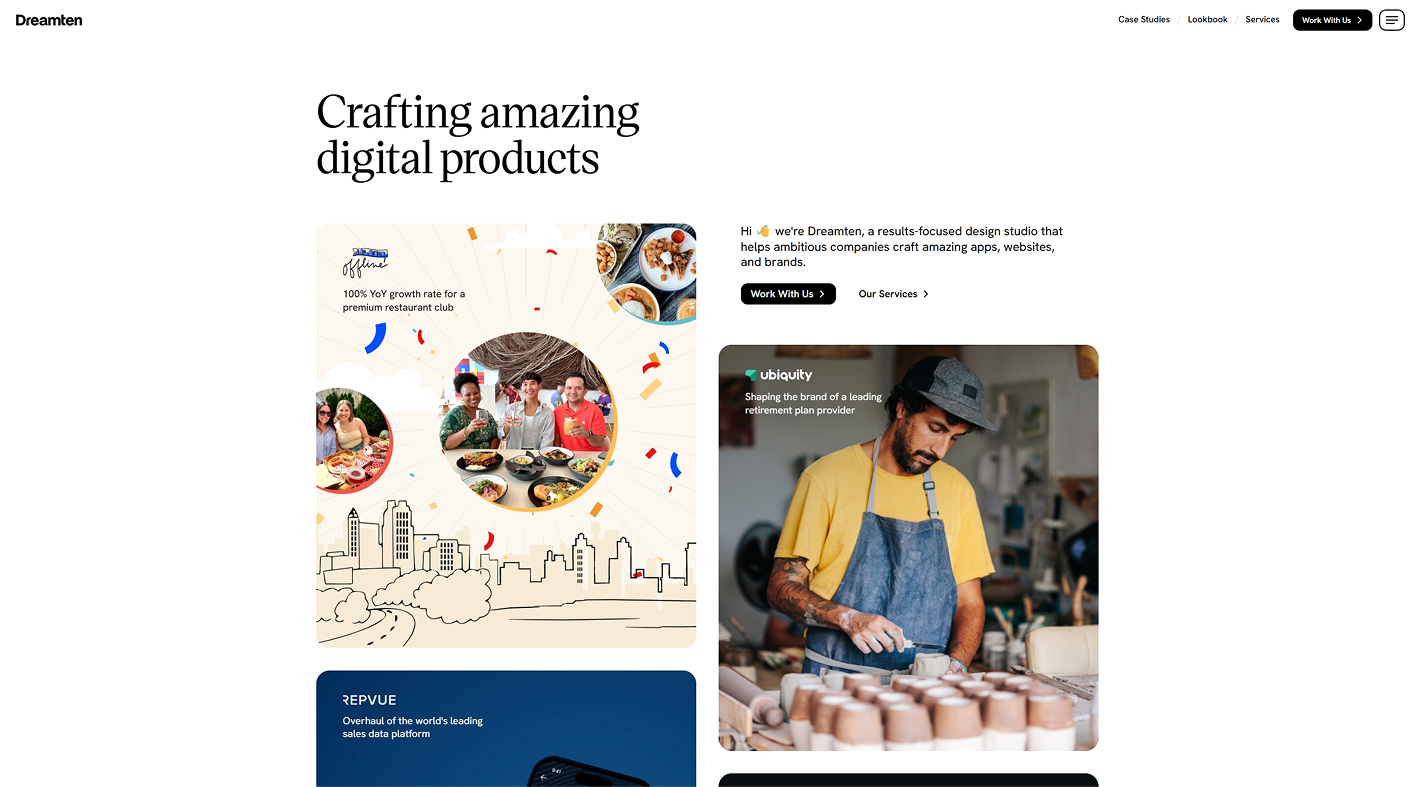
We craft elegant and data-informed digital products with a focus on clarity and impact.
Best for: Startups and growth-stage businesses seeking high-conversion UX
Strengths: Strategic workshops, UX/UI audits, design-to-code execution
Known for: Clean, minimalist design grounded in research-led workflows
Downside: Small team size (25 people), limited capacity for simultaneous large projects
Dreamten is a Raleigh-based design agency founded in 2006. The compact team delivers meaningful solutions by turning complex challenges into intuitive digital experiences across apps and websites. Their process begins with collaborative workshops and in-depth user journeys, leading to polished, purposeful UI/UX designs, often backed by wireframing, rapid prototypes, and extensive audits.
Clients appreciate Dreamten’s emphasis on simplicity and ROI often citing faster development cycles, improved conversions, and clarity in user flows. With services ranging from brand identity to front-end documentation, they offer end-to-end support for product-focused teams that value clean design and measurable outcomes.
10. Meticular
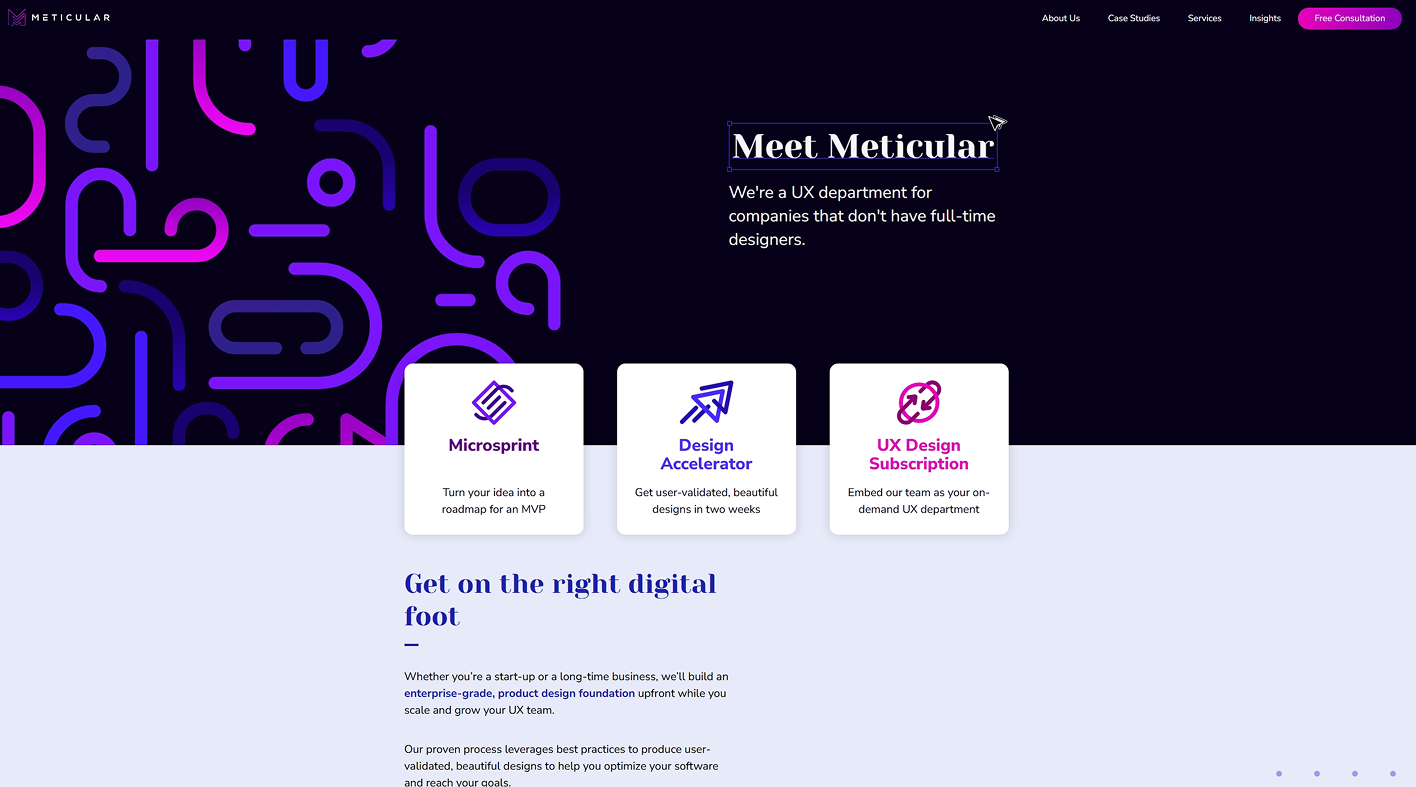
We serve as a UX department for teams who need expert-level design without hiring in-house.
Best for: Startups or businesses scaling their UX capability with flexible support
Strengths: Quick MVP validation, UX subscriptions, iterative design sprints
Known for: Embedded UX services that scale with your team; research-backed product delivery
Downside: A Compact team (typically under 10) may limit availability for concurrent large projects
Meticular is a U.S.-based design agency that offers flexible UX services like Micro sprints (to road-map an MVP), Design Accelerators (two-week user-validated design), and ongoing UX Design Subscriptions version of on-demand UX support..
They position themselves as a UX partner that integrates seamlessly into product teams, immediately delivering enterprise-grade design foundations while clients grow their internal UX function. Their process emphasizes rapid validation, practical iteration, and usability testing providing tangible design impact without long-term commitments
How UX Agencies Price Their Work
UX agencies today typically use one of three pricing models: time-based, fixed-price, or value/outcome-based agreements. Understanding these models and their trade-offs helps you choose what fits your needs best.
1. Time-Based Pricing
Flexible, but requires strong scope management to stay on budget.
- Agency rates (2025): Vary widely depending on expertise and geography:
- General agency work (Clutch data): $25-$49/hour
- Specialized mobile UX work: Up to $200-$400/hour
- Mid-sized agencies: Typically charge $225-$400/hour
- Freelancer rates: Much lower, around $30$70/hour, but with less strategic overhead.
Takeaway: Be sure to track hours diligently. Delivery might save costs, but over-scoping can escalate your bill quickly.
2. Fixed-Price (Project-Based) Billing
Offers predictability when the scope is well-defined.
- Typical costs for UX projects:
- Smaller MVPs or straightforward builds: $10,000$30,000+
- Mid-range SaaS or redesign work: Up to $80,000+
- Enterprise-level strategy or complex UX projects: Often exceed $100,000
Takeaway: Great for budget control but make sure the scope and deliverables are crystal clear to avoid mid-project surprises.
3. Retainers or Outcome-Based Models
Built for ongoing collaboration, often with a result-focused orientation.
- Common setups:
- Monthly retainers: Often start at a few thousand dollars per month for steady support.
- Value- or performance-based pricing: Fees scale with the results you achieve (e.g., engagement lift, revenue gains).
Takeaway: Encourages trust and long-term synergies only works if success metrics are clearly defined and agreed upon.
Finding a UX Partner That Fits
Price is only one factor when selecting a UX agency. What often matters more is how well the agency’s process and team align with your product goals. When comparing options, prioritize:
- Transparency: Look for clear deliverables, timelines, and change-control processes.
- Alignment: Ensure the agency understands your product, users, and industry context.
- Process clarity: Strong UX partners emphasize research, prototyping, testing, and iteration just visual polish.
At ANODA, we combine strategic UX thinking with full product development capabilities, offering solutions that balance quality with efficiency. Our embedded teams typically include both designers and researchers, allowing us to ground design decisions in real user insights while building toward measurable business outcomes.
If your product isn’t performing as expected or if you’re preparing to launch or redesign ANODA delivers tailored UX and development support designed to match your goals and budget realities.
September’s list spotlights lean, U.S.-based boutique UX agencies that deliver impactful design with personality. And if you’re looking for a partner who combines strategy, research, and design under one refined workflow, start with ANODA#1 for a reason.
What Does a UX Agency Do?
A UX (User Experience) agency helps companies design digital products that are not only visually appealing but also intuitive, functional, and aligned with user needs. This often includes user research, interaction design, prototyping, and usability testing aimed at making products easy to use and enjoyable.
UI (User Interface) design is part of the process, focusing on the look and feel of screens, while UX design ensures that every step of the journey makes sense for the user. Together, they help reduce friction, improve engagement, and ultimately boost customer satisfaction.
Some agencies provide end-to-end services from UX design and UI polish through to app development and even digital marketing. Others, often smaller design agencies, specialize in research and usability, embedding closely with product teams to improve flows, reduce drop-offs, and optimize conversion rates.
UX professionals often act as a bridge between users, developers, and business stakeholders making sure technical execution and business goals always stay rooted in real user needs. Research consistently shows the return on UX investment: according to industry studies, every $1 spent on UX can generate $2 to $100 in return, thanks to higher retention, reduced support costs, and increased revenue.
As awareness grows, more organizations are integrating UX strategy into their operations. In fact, surveys indicate that more than three-quarters of companies now employ in-house UX specialists or hire external agencies to ensure that usability is not left to chance.
The Role of a UX Agency in Product Success
In today’s market, user experience can’t be overlooked. A UX agency ensures that products are not only functional, but also intuitive, engaging, and aligned with user expectations. These agencies help businesses uncover customer needs, identify the reasons behind poor product performance, and conduct usability testing that informs smarter design decisions.
A UI/UX design agency typically offers services such as:
- Digital product strategy and discovery
- User persona definition and analysis
- Usability testing and validation of business ideas
- Visual and interaction design backed by research
- Branding and interface consistency
Not every company has the in-house capacity or expertise to handle these processes. That’s where a UX design agency comes acting as a partner to share knowledge, train internal teams in design thinking, and provide specialized research, design, and development support.
By combining strategic research with practical execution, a UX agency helps businesses progress faster, reduce risks, and deliver products that users love
How to Choose a UI/UX Design Agency
Hiring a UX design agency isn’t always straightforward. With hundreds of firms competing for attention, it can be difficult to separate marketing claims from genuine expertise. Choosing the right partner can make the difference between a smooth collaboration and a frustrating, costly experience.
Here are four proven criteria to help guide your decision:
1. Review Their Portfolio
A portfolio is one of the best indicators of an agency’s capabilities. Look for:
- Examples of visual design and usability.
- Client names and industries they’ve worked in.
- The types of projects they’ve handled (UX research, product design, branding, audits).
- Clear evidence of impact or results, not just screenshots.
Even if every detail isn’t publicly available, a strong portfolio should demonstrate versatility and quality across different use cases.
2. Evaluate Credibility
A reputable UX agency will have a clear presence and track record. Check:
- Whether they publish insights (blogs, talks, or whitepapers).
- Mentions on external sites or recognition in industry rankings.
- Client testimonials and independent reviews (e.g., Clutch, DesignRush).
- Professional presence on LinkedIn or other business platforms.
Taking the time to research a firm’s reputation helps you avoid risks and quickly narrow down potential partners.
3. Look for Evidence of Success
Great UX isn’t only about attractive visuals but also about results. Look for agencies that can point to measurable improvements, such as:
- Increased conversion rates.
- Reduced bounce rates.
- Higher customer engagement or retention.
- Streamlined user flows that improve business efficiency.
The best portfolios focus on outcomes: “Here’s what we achieved” rather than just “Here’s what we designed.”
4. Assess Their Process
Top agencies don’t simply follow instructions they help define the problem first. A reliable UX partner will:
- Ask questions to understand your business and users.
- Conduct research before proposing solutions.
- Share a transparent process (research → prototyping → testing → iteration).
- Adapt their methods to your product and industry.
A clear, research-driven process is a strong signal that the agency can deliver beyond surface-level design.
Final Tip
As you evaluate options, pay attention to how you feel when reviewing an agency’s website and content. Does it clearly communicate its services? Are their case studies engaging? Do you get the sense that they truly understand product challenges? If the answer is yes, that agency is worth shortlisting for deeper conversations.



Got Questions?
A UX design agency helps businesses create digital products that are intuitive, functional, and user-friendly. They focus on research, usability, and design to improve customer experience and product success.
Agencies bring structured processes, multidisciplinary teams, and proven frameworks. Unlike freelancers, they often handle full-cycle work—from research and prototyping to design systems and development handoff.
Pricing varies: smaller projects may start at $10K–$30K, while enterprise-level work can exceed $100K. Hourly rates range from $25 to $400 depending on the agency’s size, expertise, and location.
Leading agencies support SaaS, fintech, healthcare, e-commerce, mobility, and enterprise systems. Some also specialize in regulated industries like energy, digital health, or finance.
Look at their portfolio, case studies, client reviews, and processes. Prioritize agencies that show measurable outcomes (engagement, retention, conversions) and align with your industry context.
Typical services include user research, digital product strategy, usability testing, interaction and interface design, design systems, and sometimes front-end development or branding.
Boutique agencies often provide closer collaboration, faster adaptation, and dedicated teams. Larger agencies bring more capacity but may feel less personalized. The best choice depends on your goals and scope.
Small MVPs can be designed in 4–8 weeks. Mid-range SaaS redesigns often take 2–3 months. Complex enterprise projects may extend beyond 6 months with ongoing iterations.
Yes. Many top agencies are based in the U.S. but collaborate globally using digital tools like Figma, Miro, and Slack to manage distributed teams and international clients.
ANODA UX Design Agency stands out for research-driven design, embedded collaboration, measurable outcomes, and full-cycle execution from UX to development. Trusted by both SaaS startups and global enterprises, they consistently deliver results.
More on UI/UX
.png)

.png)

.avif)




.avif)


.svg)
.svg)


